




Must See Destinations in Istanbul
By Eren Kapti
Istanbul is one of the great cities on earth. Over the centuries this city has been the capital of two grand empires. The Byzantine Empire started in the 4th century and lasted until the 15th century that’s when the Ottomans took over and ruled until the end of World War 1. Today even though Turkey is governed from Ankara, Istanbul remains the financial, cultural and historic center of this country.
For thousands of years this point, where east meets west has been a crossroads of civilization. Few places on earth have witnessed more history than this sprawling metropolis on the Bosphorus. You can cruise Golden Horn, shop the grand bazaar, and check out a poor man’s Wall Street, try Turkish delights, smoke a nargile, eat fish fresh off the boat, explore the herald in the Topkapi Palace, marvel at Byzantine domes and lose yourself in a sea of people in this vast and complex city.
Turkey bridges Europe and Asia, Istanbul it’s largest city and commercial center, straddles the strategic Bosphorus Strait. Part of the city is in Europe and part in Asia. The golden horn inlet divides the new town with its high energy business owns, from the old town where you’ll find the major sites. Istanbul provides a perfect chance to understand Islam because nearly 90% of the population is Muslim. Visitors are always welcome to visit historical mosques and at the same time experience the religion and culture with a customized tour only for you and your loved ones.
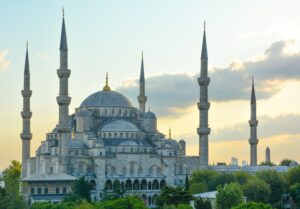 Having a tour in Istanbul you probably will cover the Blue Mosque which was the 17th-century triumph of Sultan Ahmet 1. Architecturally it is so special, because of its six minarets it rivaled the great mosque in Mecca, the holiest in all Islam. Its enormous courtyard welcomes the crowd that gathers for worship. As with all mosques you park your shoes at the door, and women cover their heads. If they don’t have a scarf, there are loaners at the door. Countless beatitul tiles fill the interior with exquisite floral and geometric motifs. It’s nicknamed Blue Mosque because of its blue tiles. Blue is a very popular color in Turkey. It impressed early French visitors enough for them to call it ‘the color of Turks’ or ‘turquoise’. While churches portray people, Muslims believe the portrayal of people in places of worship draws attention away from worshiping Allah as the one God.
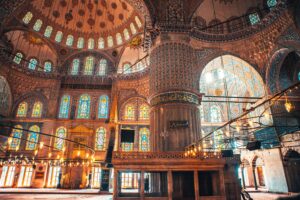 In mosques rather than saints and prophets, you’ll see geometrical designs and calligraphy. This explains why historically the Muslim world excelled at nonfigurative art, while artists from Christian Europe focused on painting and sculpture of the human form. Artful Arabic calligraphy generally shows excerpts from the Quran and quotes from Muhammad. As the church would have Jesus and God front and center, in a mosque elaborate signature medallions high above the prayer niche say ‘Muhammad’ and ‘Allah’. Large ceremonial candles flank the mihrab. That’s the niche which points southeast in Saudi Arabia where all Muslims face when they worship.
Turks love to meet and mingle at Ortakoy, just under the massive bridge that connected Europe with Asia in 1973. The temple of life in Turkey, like other Mediterranean lands, is slow enough to enjoy the moment and good friends. People love their tea, the sound of dice on the backgammon board, and sucking on the hookah or ‘nargile’ [generally a tobacco-free dried-fruit smoke]. Also, you can buy some hand made goods from Ortakoy daily and old bazaar or buy a kumpir and while eating it you can wander around the Ortakoy pier with a beatiful wiew of the Borsphorus.
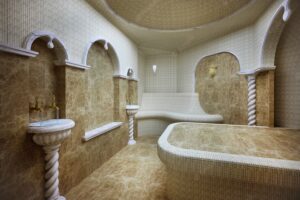 One of the most memorable things to do is enjoying the Turkish bath. Today, baths welcome tourists and give a peek into a rich tradition. You leave absolutely everything in the changing room, so it is kind a dopamine detox. Slip gracefully into wooden slippers and shuffle into the steamy caldarium. Turks brought the steam bath with them from central Asia, blended it with the Roman bath culture they found here and created the Turkish bath. First, you relax at the basin, heat up, soften up under a cascade of hot water. Savor the experience achieving maximum sweating and relaxation. Then your attendant works you over, scrubbing vigorously with rough brillo-pad type mitts, then sudsing and washing. Refreshed and cleaner than you can remember ever being, you venture back into the city ready for more history and art.
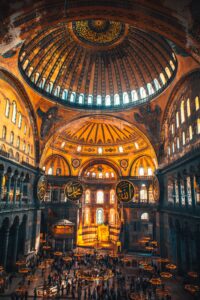 The best look at ancient Constantinople is a church turned mosque that’s been considered among the greatest houses of worship in both the Christian and Muslim worlds. Hagia Sofia, the great church of Constantinople, built by the Byzantine emperor Justinian in the early 16th century on the grandest scale possible, it was later converted into a mosque by the conquering Ottomans. Today it’s a museum. Hagia Sophia, which marks the high point of Byzantine architecture is the pinnacle of that societies 6th century glory days.
This church was completed in 537, just about when Europe was entering its Dark Ages. For four centuries after that, Christians in Europe looked to Constantinople as the leading city in Christendom, and this was its leading church. This clever dome-upon-dome construction was the biggest dome anywhere until the cathedral of Florence was finished during the Renaissance 900 years later. The vast interior gives the impression of a golden weightless shell, gracefully disguising the massive overhead load supported by masterful Byzantine engineering. 40 arched windows shed a soft light on the interior, showing off the church’s original marble and glittering mosaics. But the Byzantine Empire collapsed in the 15th century and Hagia Sophia was turned into a mosque. Christian mosaics were plastered over, and new religious symbols replaced the old. While enjoying your tour in Istanbul any further information needen will be given by your guide.
Our storybook image of the Ottomans, sultans, harems, eunuchs… those could best imagined in the Topkapi Palace. Built in the late 15th century, this was the power center of the Ottoman Empire for almost 400 years. Its buildings form a series of courtyards, the outer being used for public functions, the further in you go the more private the rooms. Among the most private was the harem. The word ‘’harem’’ means ‘’forbidden’’ in Arabic. It’s the huge suite where the Sultan lived with his wives, female slaves and children.
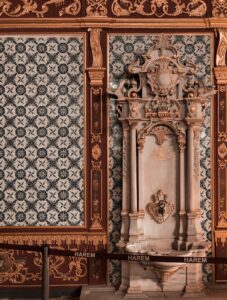
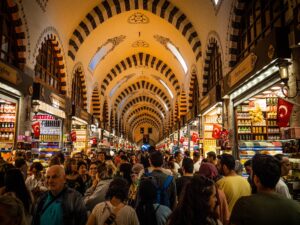 For generations Europe dreaded the Ottoman threat. They were on the march, even knocking on Vienna’s fortified door. However, through the 19th century, a combination of corruption, incompetent sultans and an aniquated medieval organization all contributed to the eventual fall of the Ottoman Empire. The Topkapi Palace represents the pinnacle of Ottoman power. For the pinnacle of Ottoman shopping, visitors seek out the Grand Bazaar. In many ways, Istanbul’s Grand Bazaar remains much as it was centuries ago, enchanting and perplexing visitors with its maze-like network of more than 4000 colorful shops, fragrant eateries and insistent shopkeepers. Despite the tourists and the knickknacks, the heart of the grand bazaar still beats, giving the observant visitor and unforgettable memory.
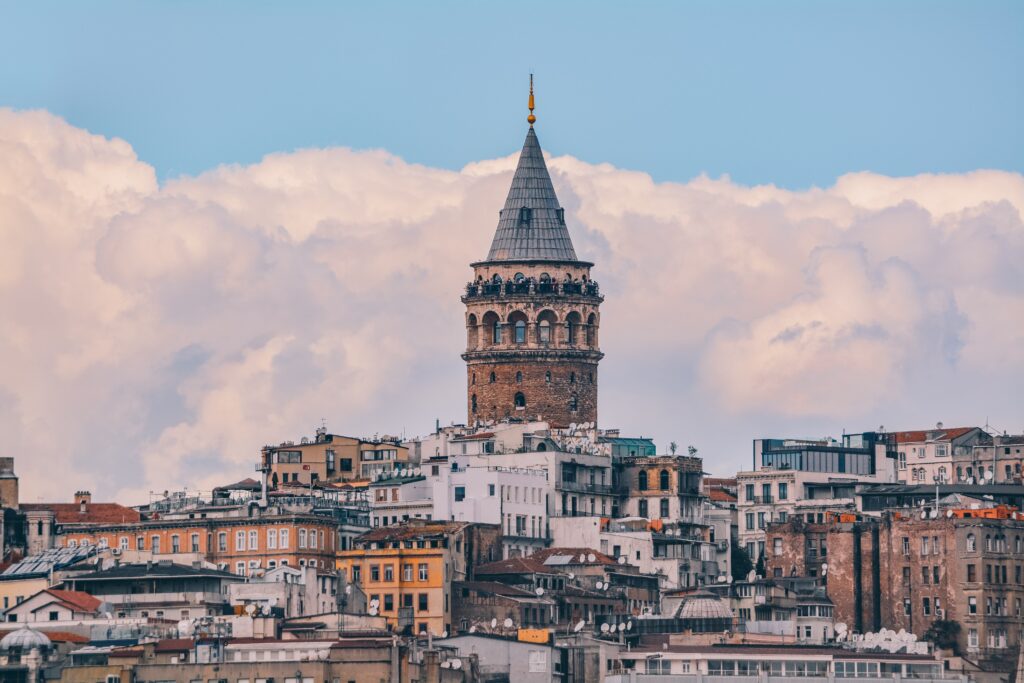 Not too far away, with a beautiful architectural design there is Galata Tower. At 219 feet high, the Galata Tower rules over the Istanbul skyline, offering great views of old city and its surroundings. The medieval stone tower, known as the ‘’Tower of Christ’’, was the tallest building in Istanbul when it was built in 1348. The tower has been modified over the centuries, at one time being used as an observation tower to spot fires. Today, its upper reaches include a restaurant and a night club, both reached by elevator in the nine-story building, where one can find the stunning vistas.
Taksim Square, Istanbul’s contemporary heart. Its major transportation hub gives us a good taste of modern Istanbul. The traffic circles a statue that celebrates the father of modern Turkey, Mustafa Kemal Ataturk. If Turkey is western-looking today, you can thank this man. In the 19th century, the Ottoman Empire was in a state of decline. Backing Germany in World War 1 and, therefore, losing, the decrepit old empire was swept away, and from its remnants arose the modern republic of Turkey founded in 1923 by Ataturk.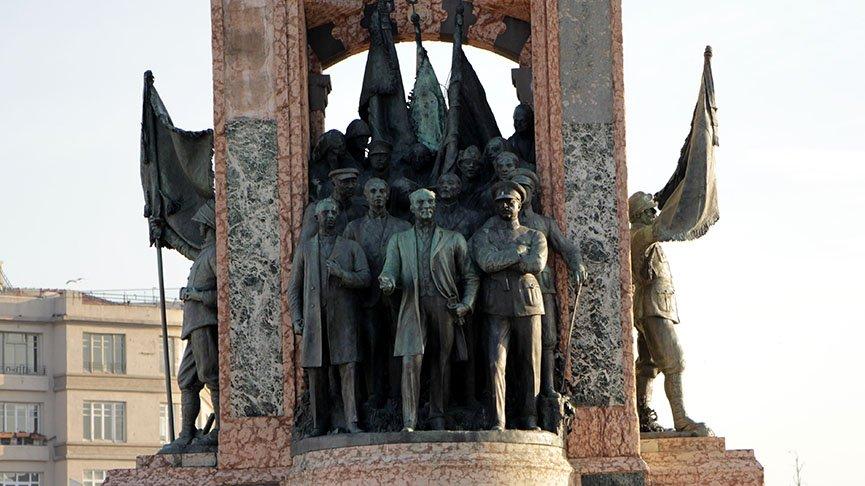
Like it’s bridge, Istanbul brings East and West together with a complex weave of modern influence, Western secularism and traditional Muslim faith, it’s a dynamic and stimulating city well worth experiencing. The best way to do it is planning a tour only includes the places you choose. Please click here to learn more about Turkey!

Post a Comment
You must be logged in to post a comment.